My friend Alex discusses Fuck You Design, an interesting response of sorts to my post about negative space in RPGs. His post in turn has me wanting to write more myself. I love simple systems, so I am always looking for a good minimalist one. The problem is so many miss the mark. It takes a lot of care to make one that isn’t just you filling in all the holes with D&D as you remember it. Carcosa is a good setting in my mind despite missing a lot of details because what’s there is enough to help get you the rest of the way. Some adventures lean so far into terseness you run them and realize you are doing all the work. OD&D doesn’t tell you what a helmet does, but there is enough to the game you can house rule something coherent. If it didn’t tell you what armour did that would be way more annoying. Anyway, this is enough for now. Read the post, it’s great!
I updated this blog post for the zine Mixed Success, which you should also check out. The essay published in the zine is now republished on this blog as Negative Space Reprise — RAM 2024
I just finished playing four sessions of Torchbearer. Jesse ran the game for a small group of us. I will write more about Torchbearer later, it was a very interesting game. Today I simply wanted to write about rules and how players engage with them.
In OSR play, I think it quite common that players are doing their utmost to avoid engaging with the rules of play! They often exist to model some sort of failure state: saving throws, combat, etc. The odds are in the house’s favour, so play becomes about fictional positioning to avoid leaving things to chance. OSR games are about overcoming challenges, and clever play in this space is all about stacking the odds in your favour. Of course, the best odds are the ones where you aren’t rolling any dice.
I play with people who regularly don’t know the rules of the game we’re playing. If they need to know something the expectation is the DM will tell them. Torchbearer sits in stark contrast to all of this. You need to know the rules as a player and as a GM to play effectively. It’s an interesting game of resource management. Just like B/X, but you have even more to manage besides your food, light, time. You also have to worry about your conditions, checks, etc. Playing the game is about engaging with the rules. Clever play comes from understanding the mechanics and bending the game to your favour.
When chatting after our last session of Torchbearer I brought up some of the above and one of the player’s thought it so odd: you are just playing pretend, the game is rudderless. Players choices don’t mean anything, because nothing really means anything. A fair assessment, for sure. But I suppose how I have described things above isn’t the whole story.
OSR play feels like it’s about engaging with the negative space of the rules. The rules layout the guardrails for play. This is a game about exploration and adventure. You might need to Save vs. Magic, it’s written on your character sheet. You might need to fight a monster, you have hit points and to hit bonuses. The game tells you what it’s about, and where you need to worry, and play then is about trying not to worry. OSR play isn’t simply playing pretend because the game frames what your pretend looks like—like all role playing games.
Games that work well provide support for play through their rules, GM advice, player advice, etc. This is true regardless of the model of play as described above. When making a game, especially a rules lite game, you should think about how players will approach the rules of play, and if there is enough there to encourage forward movement and interest.
You should check out this name generator from Elijah Mills which I discovered on the NSR discord server. This is pretty fantastic. As he describes it: “I made a post-apocalyptic name generator for an upcoming collaborative project. We combined 200+ names from the Iliad and Odyssey with hot-rod terminology to get some really whacky results that are perfect for our setting.”
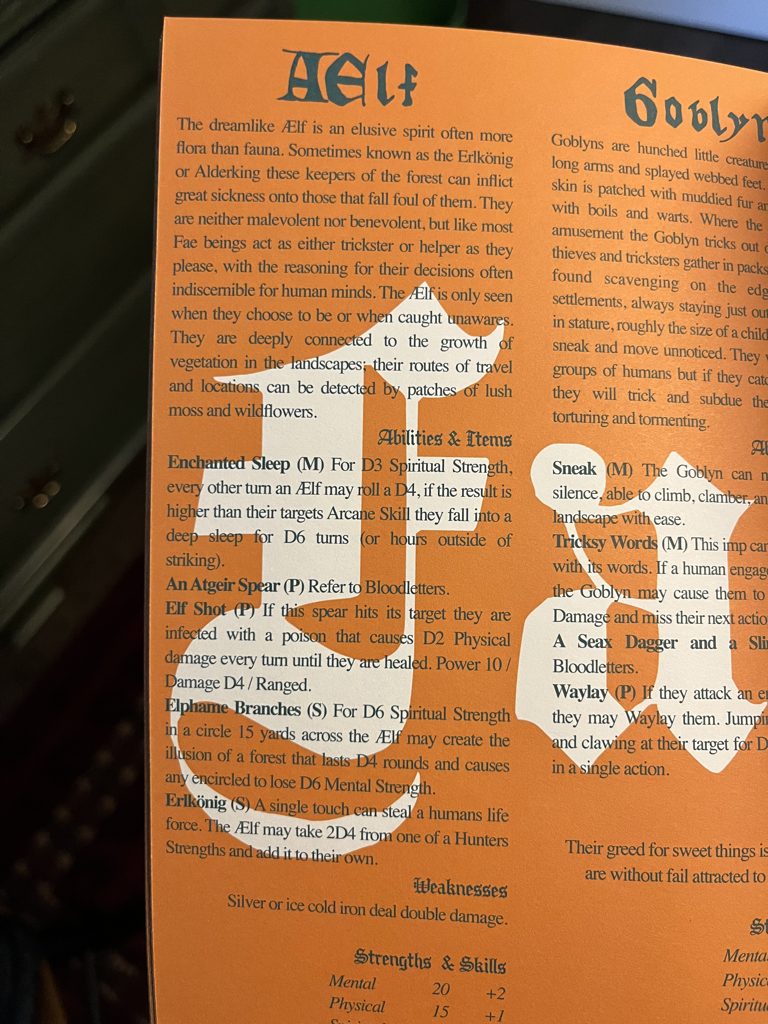
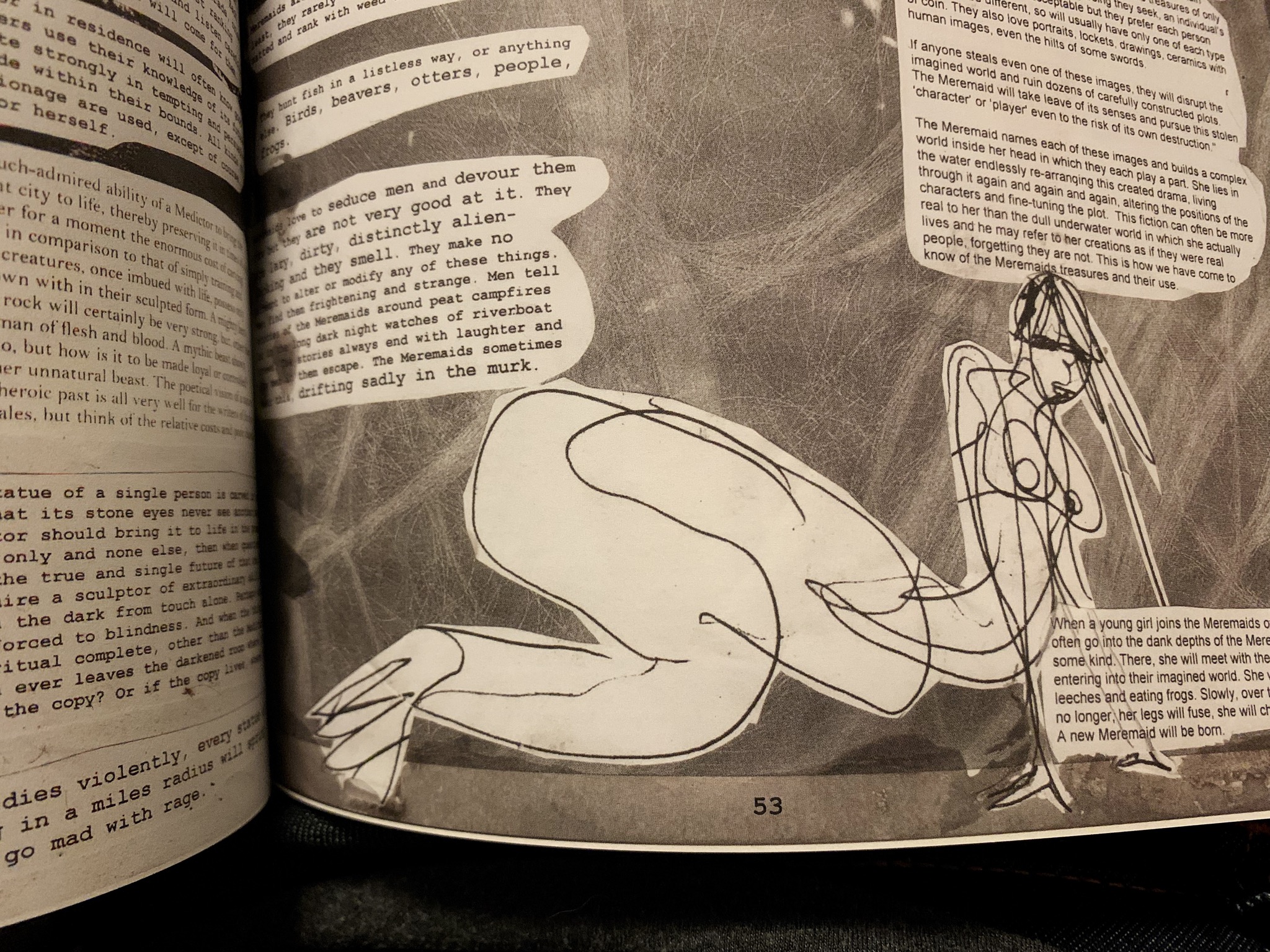
Jahtima, a new book in my mail via FourRogues. (Between them and Ratti Incantati my RPG spending has become … well more, anyway. No regrets!) I saw book and was intrigued: an RPG about hunting monsters in early “medieval” Europe, which is currently what I am interested in. The graphic design is quite pretty or bold at times, but maybe also gonna give you a headache? This isn’t a novel, though. Maybe a headache is fine if you can find the page quickly.
This is a little bit of an experiment. This post is what some might call micro blogging. If you’re reading this in an RSS reader it’ll look the same, but on my website this post is displayed a little bit differently. It should look a bit demure next to a bigger grown-up blog post. 20 years ago a lot of blogging felt short and casual. Nowadays it feels like people feel the need to say a lot, and find friction in the format. People move their casual messages to sites like Twitter or Facebook. But the ephemera you post online should belong to you as well. With the death of G+ I saw so much great stuff just vanish. So many messages from friends, interesting discussions, etc. Some of it lives in an export on my hard drive. A lot of it’s likely gone forever. I should blog more, but blogging doesn’t need to be long essays and deep discussions. Sometime it can just be sharing for the sake of sharing. Someone takes a small idea you have and turns it into something wonderful.
In a plot twist of sorts, the #TorontOSR has been playing more narrative games of late. (You can call us #StorYYZ, of course.) We recently wrapped up a 4 session arc of Cartel, which prompted some interesting discussion in our Discord. In a double plot twist, Paul T, who you may recognize from storygames.com, was the person who ran the game. He has somehow been sucked into the #TorontOSR, and joins us often, like some sort of ethnographer. Paul writes way too much and just throws it into the ether. A waste! So I have taken his words and shared them below (with his permission, of course). The conversational tone below is because it was part of a conversation. I thought this was an interesting view into how to think about playing so-called story games. The emphasis below is my own: this was maybe the idea that jumped out at me the most.
Choosing Left or Right
In any game, there are important decisions to be made, which push things forward to move us towards escalation and resolution. Part of player skill in these endeavours is a) being able to identify which decisions are important, which are arbitrary, and which are both, and then b) making them so the game can move forward.
In an OSR game, very often that’s “do we go left or right here?” Good players know when it’s a meaningful decision and when it’s an arbitrary one (so you can just flip a coin or whatever), and play accordingly. Move the game forward—it doesn’t go anywhere unless you choose a corridor, bub.
In a dramatic game, though, those spatial decisions often/generally don’t have any weight or importance. What really matters is morality, theme, and character drive. That’s where the game doesn’t do anything if the players don’t move. Especially if we’re trying to play on a short time frame (as happens if you play a handful of 2 hour sessions online: it’s basically an extended one-shot). So it’s important to identify those crucial points, and make a strong move on them. Strong means dramatic, important, or resonant.
In an OSR game, failing to choose left or right when there’s no real info to go on will just stall the game. In a dramatic game, similarly failure to decide whether you hate your mother or whether you want to poison or sleep with your rival will stall the game. The GM has tools to push things along, but the game doesn’t really “go” until the players take strong positions on those things.
And often, like left or right (especially in a short-form game), they are arbitrary, so you can go with your gut. However, it’s important to pick one, make it strong, and make your choice quickly.
There are two main ways this happens in dramatic games:
The player thinks about the story as an author, picking something that excites them or the people around them.
We set up a pregnant situation, usually with the player heavily involved and bought in emotionally, and then in play the player can think as the character and react passionately and instinctively. Follow your gut and react powerfully from the mindset of the character.
You know when you’re playing a character and suddenly you just know that they hate this new person who appeared? You don’t even know why, it’s just clear as day to you? That’s the feeling. The second way is generally more exciting (for me, anyway) because it’s visceral, but it requires some setup. You build a situation with that potential energy in it already, get excited about it, and then dive into character and play from the gut. This means driven, passionate characters, and a situation which puts pressure on them.
This is very exciting in play! A form of unconscious authoring which is both powerful and moving. However, when the conditions for it do not exist (as often happens in more short-term play), you have to make a choice: help the game move ahead by making the first move.
A good player in this style often makes bold moves like this. It can be complex or nuanced, or it can be simple, like announcing that you feel a certain way when an NPC is introduced (“Oh, a noble! I hate all nobles, and, by extension, hate this guy with a totally irrational passion”). It’s like playing White in Chess - there’s no battle yet, but you’ve got to advance a pawn and start one.
Next time you see a movie or TV show, note how the writers do this. Why’s Batman so angry? A criminal killed his parents.
In our Cartel game, I was happy when Sofia and Alvaro took a strong stance and made a move by choosing to kill her husband and his boss in order to take over the family. That’s what allowed us to reach a sense of conclusion and forward motion. Nice!
That’s an angle on it, anyway. Questions, comments, criticism are all welcome if anyone wants to discuss! — Paul T, March 24th, 2022
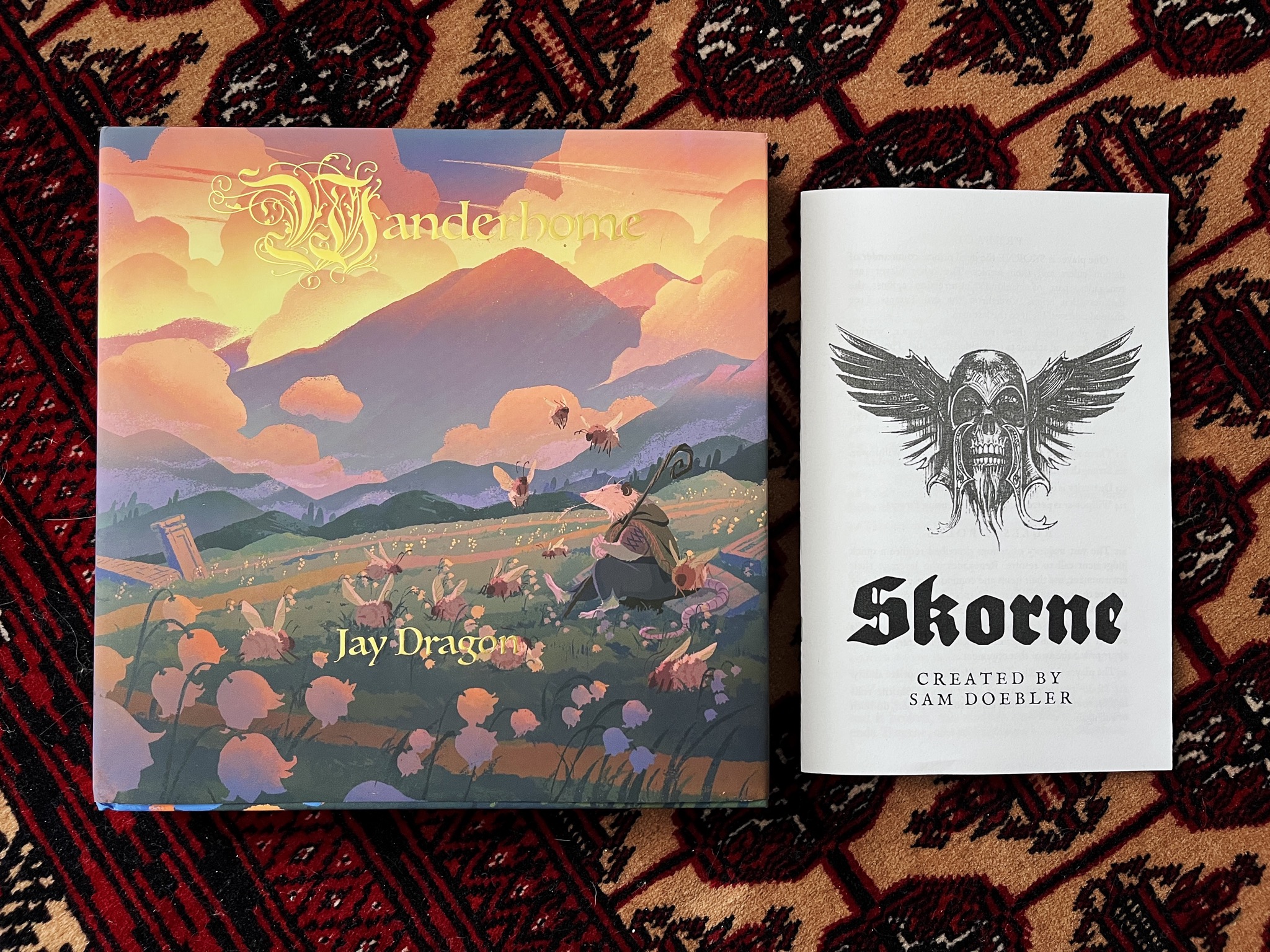
I bought two games that feel like they exist in sharp contrast to one another. The first was Skorne, an OSR/FKR game. It was a $3 PDF I printed at home and folded into a zine. The second is probably the most famous Belonging Outside Belonging game at this point, Wanderhome, which arrived at my door in its fancy coffee table book form.
One player is SKORNE the devil prince: commander of demon rulers and their armies. The other players are renegades, part of mankind’s insurrection against the darkness that reigns. Overthrow the evil Tyrants. Free chained captives. Fight to the last man.
That’s all Skorne has to say about what kind of game you’ll be playing. What else is there to say, I suppose? I already know what I’ll do with this game. Anything else the author has to say is wasted words.
To be honest, it feels rare that an OSR game tells you explicitly what it’s even about. LotFP’s Rules and Magic opens like so:
Roll 3d6 for each ability score (Charisma, Constitution, Dexterity, Intelligence, Strength, Wisdom), in order, and record them on your character sheet.
The book jumps right into the action.1 Of course, I never struggled trying to understand what I was going to do when I picked up that rule book. I knew, somewhere deep in my brain.
Wanderhome, though. What the hell even is this game? I asked my friends:
So is the source of conflict in Wanderhome dealing with nature and the traits of the people you meet? Am I thinking about this all wrong? Like some totally different paradigm I need to get my head around.
A friend replied to tell me the obvious: it’s a game about going places and meeting people. Whether there is conflict or tension is besides the point. The funny thing is, Wanderhome tells you as much right from the start. Again and again, really. The introduction is long and poetic and detailed. The art is beautiful and evocative. You can picture the Miyazaki movie unfurl in your head.2 Still, I found myself thinking, “but why?”, in a way I never do with D&D-a-likes because I have so deeply internalized what those games want you to do. Someone reading Wanderhome without any of the baggage of playing other RPGs will likely intuit what it’s about with ease.
The easy thing to do when you come across a game outside your comfort zone is to dismiss it out of hand: “how is this even a game?” Personal preference turns into condemnation. I try and make an effort to understand where games are coming from. The experience of playing games further afield from my tastes has at times been revelatory. Approaching a game on its own terms with an open mind doesn’t mean you’ll end up liking it. There are many games I read and bounce right off. That’s fine, not all games need to be for me, not should they.
I’m looking forward to playing both of this games. I’m sure i’ll have much more to say.
LotFP’s rulebook starts this way because it was originally part of a trio of books, a Tutorial Book that would introduce players to the game, and a Referee Book that further solidfies LotFP’s approach to gaming. Divorced of its siblings when turned into a hardcover, the Rules and Magic book ends up feeling almost aggressive or exciting: this is how you make a character let’s go! Something I really love about that rulebook, actually. ↩︎
Miyazaki minus all the violence that exists in his movies: ha! ↩︎
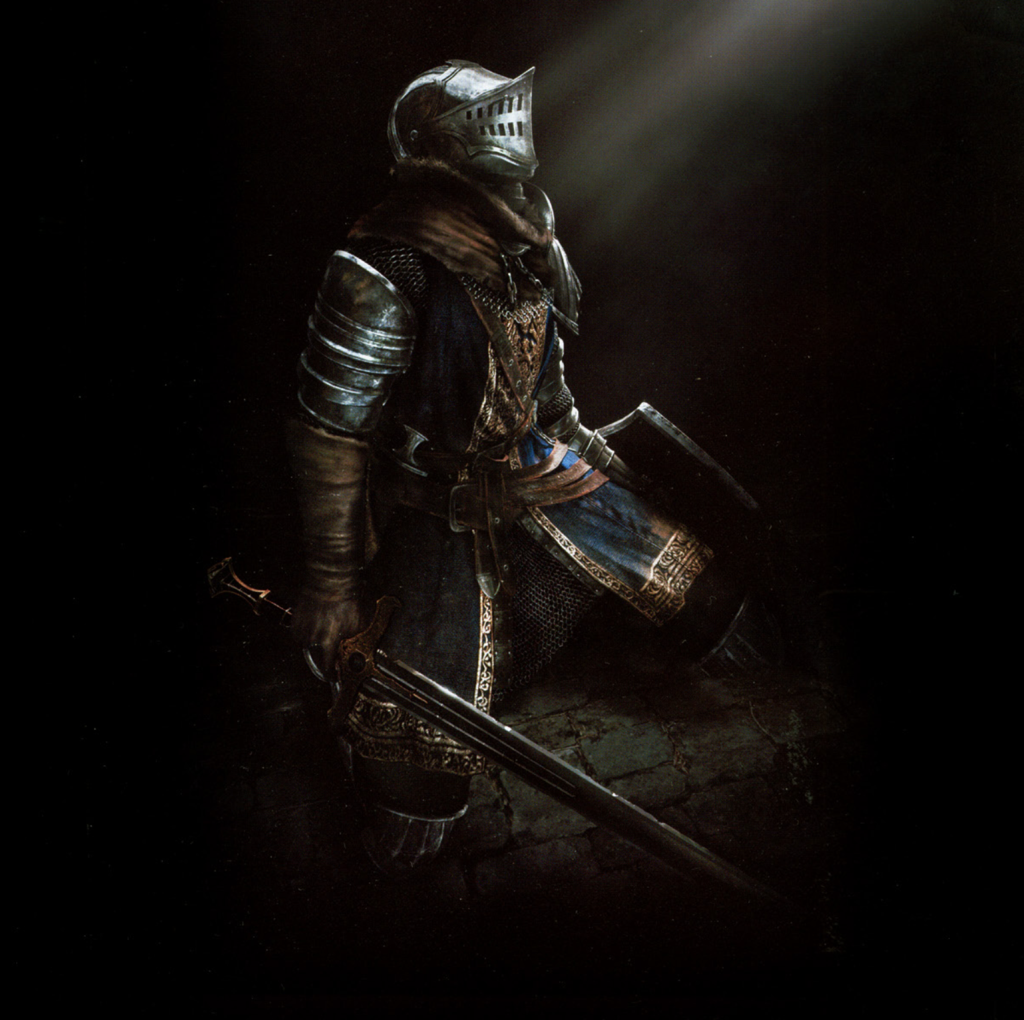
In 1975 Gary Gygax wrote an article describing a simple approach to creating a campaign world over 5 weeks, which you could then expand upon through play: like God intended. Ray Otus took this article and expanded on its ideas to create a structured work book with concrete steps for each week and his own example of creating a small campaign setting. Recently Dungeon Possum posted about his plans to go through this process. This got me interested in doing the same. I am keen to create a basic-ass fantasy setting. I normally gravitate towards Gonzo He-Man nonsense. Playing Dark Souls and Demon Souls over the last year has me interested in Arthurian fantasy—by way of a confused Japanese man. And so that’s what I will go with. We’ll call it Misericorde for now, until I figure out the names for things in this setting.
Every so often Nate will pop into the discord we’re both in to chat about his super-high level D&D 5e game: it’s totally bananas and inspiring. He made this off hand remark about the Red Dragon in his game:
The red dragon Vlaurung lives in a palace in space and is the consort of Tiamat.
One of my favourite parts of Dark Sun was that there was a singular Dragon: it made the monster more mythic in my mind. Sean felt the same way about making monsters unique:
I feel like almost any game could be made better by taking the monster manual and just writing The before every monster.
And then Brendan reminded us that he figured this all out many years ago: Sui Generia.
Some creatures feel like they maybe aren’t as nice a fit for this treatment, your D&D mooks: kobolds, orcs, goblins, etc. Alex suggested “the Goblins being a single band of six (6) named assholes is as good as if not better than a monolithic Goblin.” Chris followed up, “I feel like you could have The Kobold, but still have a Kobold society that he’s built down in the mines with stolen children or whatever and the kids all paint themselves blue and make shitty traps or whatever else kobolds do.” I love it.
This feels like such a simple and compelling way to create a unique setting from a collection of very common elements. You could pick 10 of your favourite monsters and create a unique world for you and your friends. These conversations always have me thinking about running OD&D again.
I didn’t want this conversation to disappear into the ether that is random peple on a random discord, so here we are. Blogs are for remembering.
Patrick and Scrap are currently running a Kickstarter for the follow-up adventure to Deep Carbon Observatory, Demon-Bone Sarcophagus, so now seems as good a time as any to talk about their work. I like seeing them succeed. When I first reviewed Deep Carbon Observatory I had the following to say about Scrap’s work:
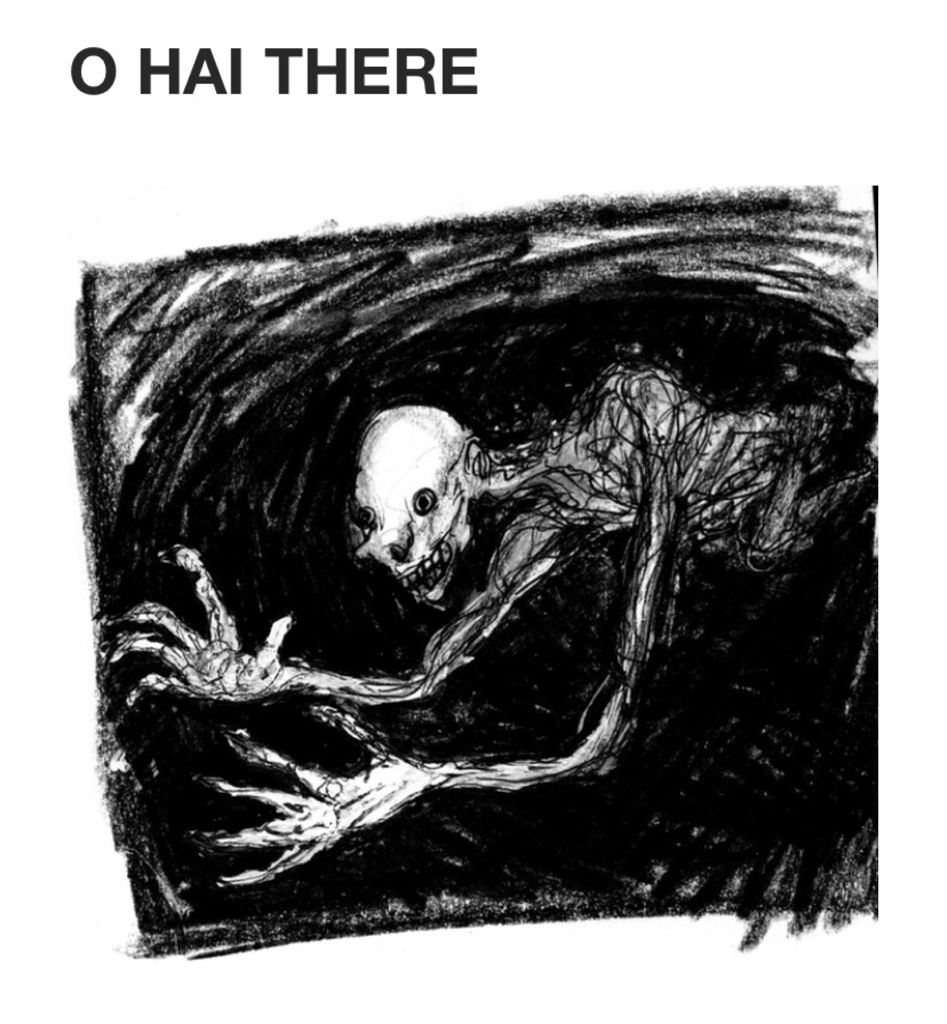
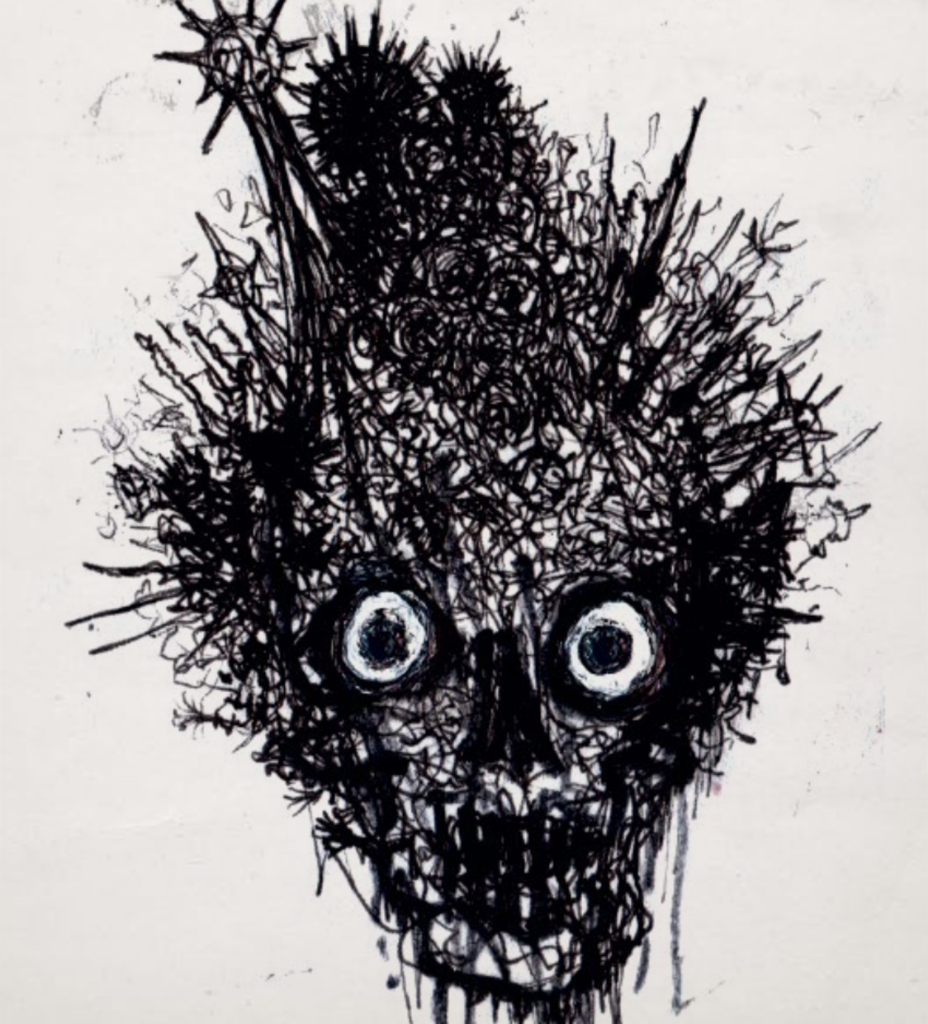
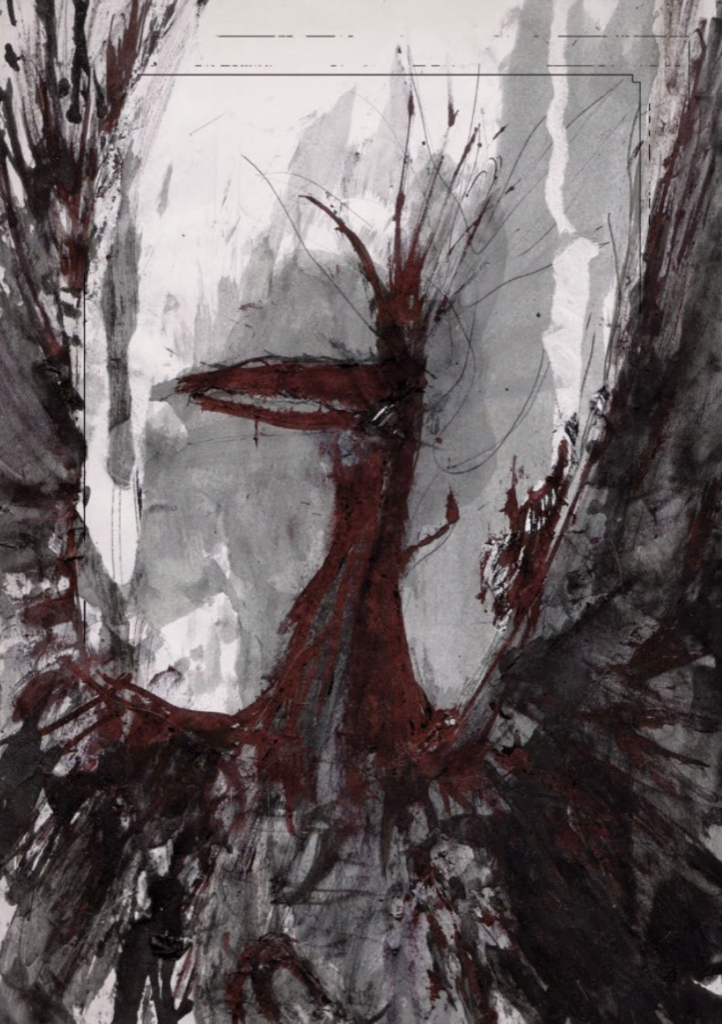
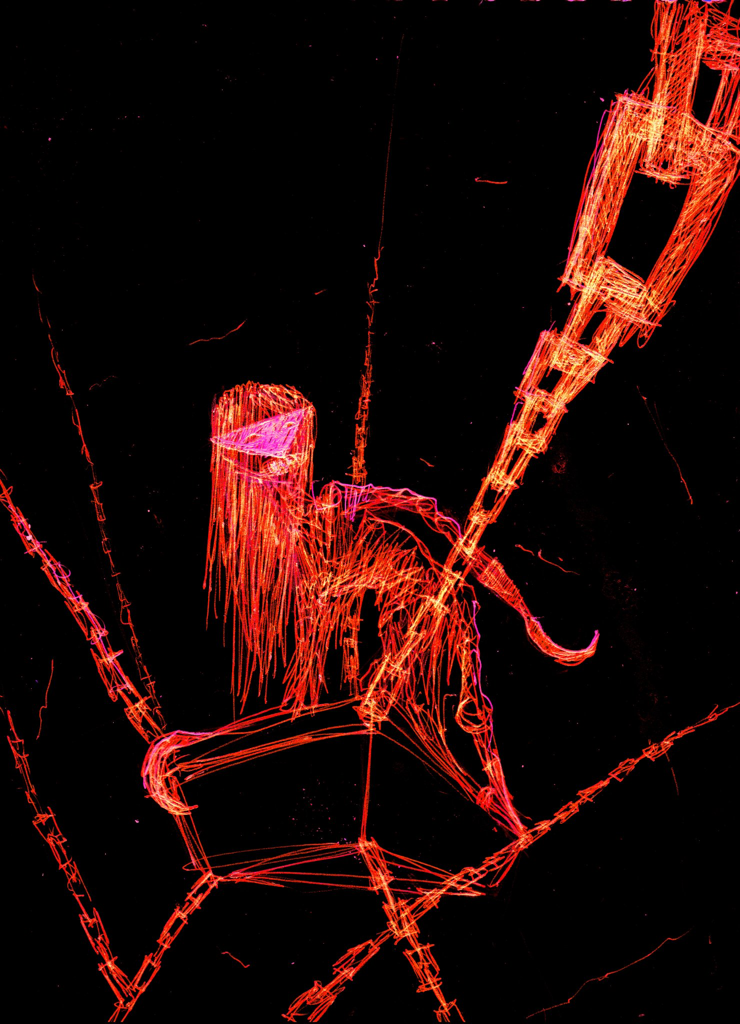
Scrap Princess’ illustrations contribute to the overall tone of the book. I find her work is so frenzied and terrifying. Maybe that’s not the right word, but there is something about how she draws that I find really visceral. I don’t know anyone else that draws like her.
All these years later, I still don’t know anyone who draws like her. How does she even draw?
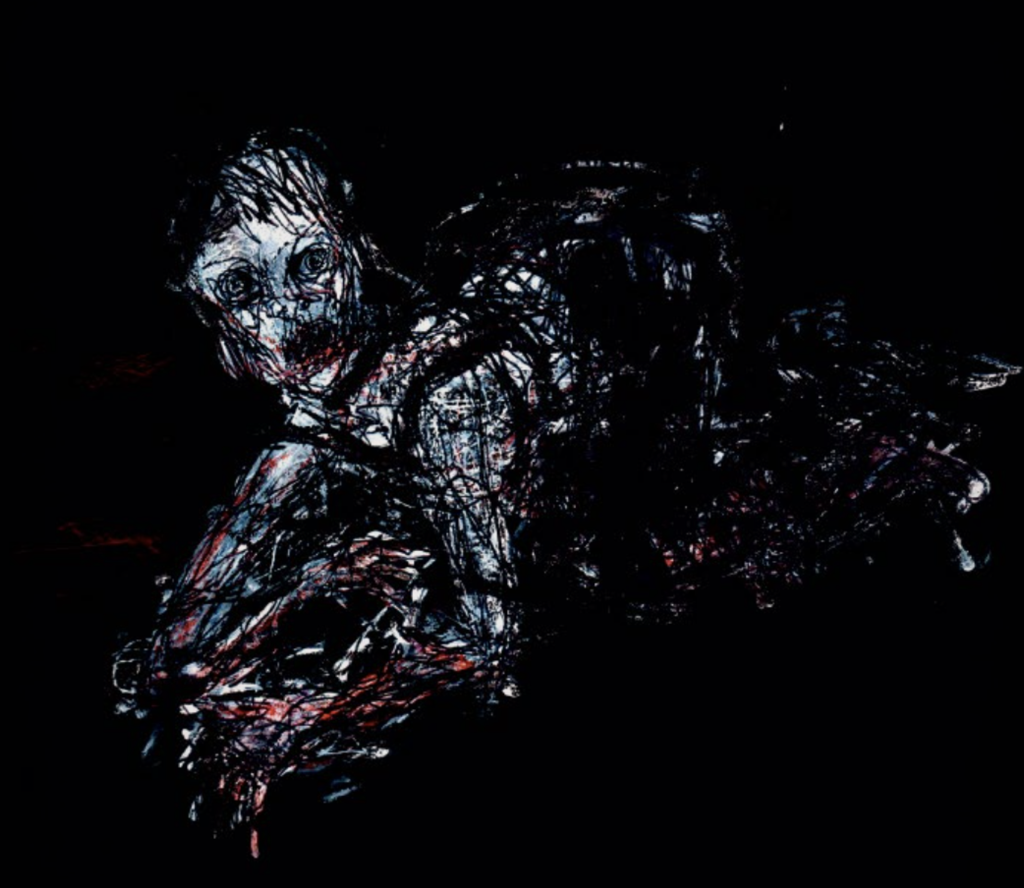
A few years later she would draw another favourite picture of mine, a picture of madness from Veins of the Earth. (Such an incredible book.) The picture feels like an evolution of the giant. I asked Scrap if that was her intention and she said, “Nope. (Other than its horrible and in a cave?)”
People will often denigrate Scrap’s art as scribbles. Which, on the one hand, sure, but there is clearly more going on. I don’t scribble this good. These eyes are piercing. The line work of her drawings feels frantic. It has an energy that feels charged. On Twitter, Warren D summed things up nicely: “I always emotionally respond to Scrap’s art before I finish consciously visually processing it; ‘feel’ it before I ‘see’ it. Most WotC art I see quickly and feel nothing.”
Fire on the Velvet Horizon is likely peak scribbling Scrap, but maybe also highlights what you can capture in such minimalist drawings. The history of that project is interesting. While Vein of the Earth was stuck in the miasma of layout and production, Scrap and Patrick worked on this monster book. Scrap mailed Patrick drawings and sketches, and he would turn them into monsters.
The thing about Velvet Horizon that gets overlooked, constantly, is that I chose a wide range of drawings to send to Patrick, and that variety included extremely loose sketches, more developed drawings, stuff I thought was bad, stuff I thought was good. Then whatever he responded to , he responded to, and that drawing would then go into the book. However there’s like a few entries where what he responded to was such a bizarrely small and brief drawing that I chose to draw a new drawing to go on that page, but I believe in every case the responded-to drawing is also on there too. There’s a few where the drawing responded to was something in the margins or on the back of another drawing, and I hadn’t even expected those scribbles to be up for consideration. That was all part of the experiment of that book.
I asked Scrap if she was like Picasso and could draw perfectly but decided that was boring. She laughed in my face. (Well, virtually.) She then went on to say:
Trying to get the hang of basics does inform my scribble style. It’s been an ongoing process of trying to draw conventionally or at least do the basics, turning out bad ugly drawings, but in the process of improving that skill, my gestural style improves as well.
Why does she draw the way she does? We can just ask her:
What has made my drawing looking like how it does is that I really struggle with the basics, especially anything informed by methodicalness and close observation. At some point in high school me and a friend were drawing our own illustrations on a print out of fairly broken fighting game rpg someone had downloaded from the early internet. I was trying to draw conventionally and it was turning out bad, and he was just going for it doing these crazy scribbles and they turned out amazing. Even when they didn’t look like what they were meant to , they still were hilarious. It was at that point that I realized if I just cut loose and scribbled and then tried to turn it into something , it would have much better results.
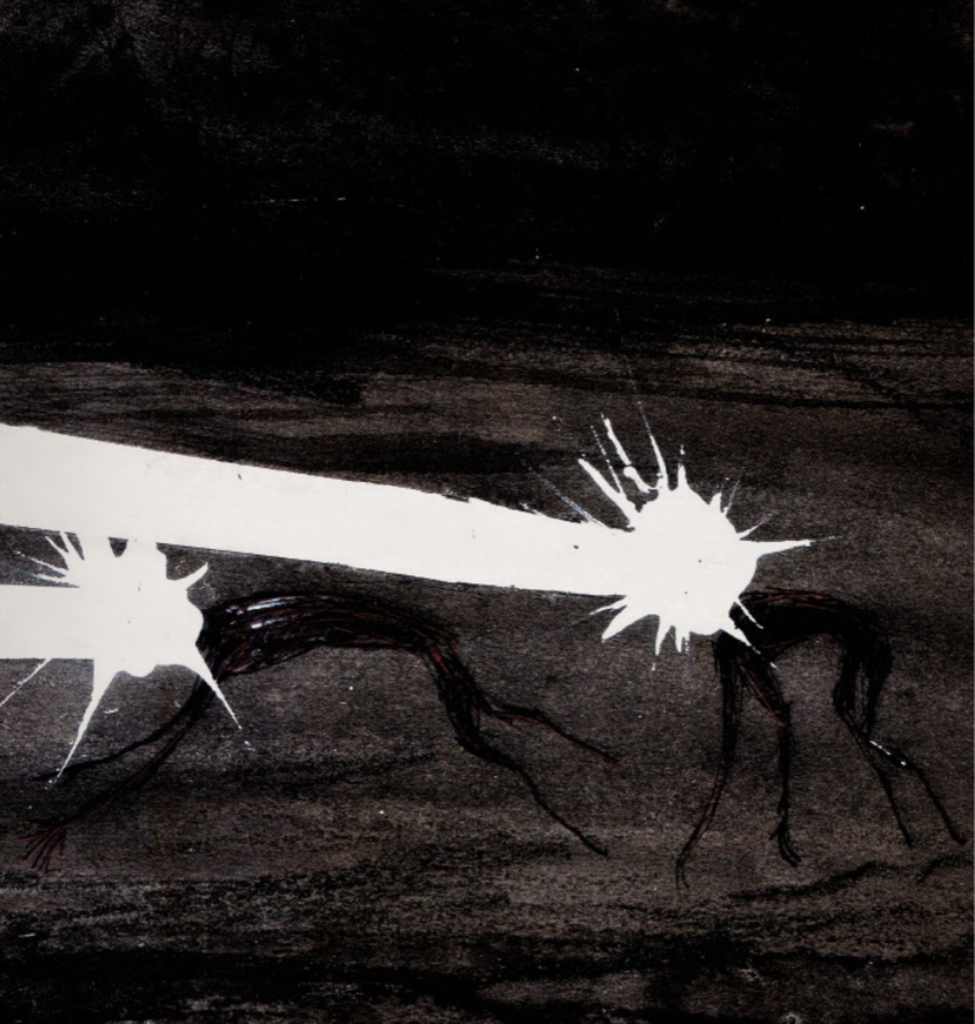
Veins on the Earth and her later books feature a bigger variety of types of art, but everything she does is always more abstract and impressionistic than your typical RPG drawing. The Blink Dogs and the Anitpheonix from that book are a couple of my favourite examples of her not-scribbling style.
Scrap isn’t active on social media, but that doesn’t mean we should Forget about D.R.E. This post mostly exists to share some of her art, and maybe introduce her to people who weren’t around on G+ when she was more active in “the scene”. To get back to where we started, enjoy this picture from their latest Kickstarter.